
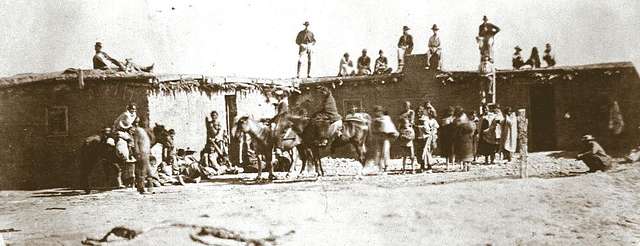
The Long Walk Home: Bosque Redondo, the Treaty That Ended It, and the Public Health Disaster the US Government Built on Purpose
Have you ever watched a plant turn yellow and die in soil that looks perfectly fine? When soil gets too alkaline, the chemistry locks nutrients away from the roots. Iron, zinc, manganese, all present in the ground, all out of reach. Seeds germinate and stall. Leaves go pale. Plants that should grow just don’t.The Diné (Navajo) people knew how to farm. They had tended corn, wheat, and beans for generations in the canyon landscapes of Dinétah, reading soil and season the way any experienced farmer does. When the United States Army confined more than 9,000 of them at Bosque Redondo, a flat, windswept stretch of eastern New Mexico, they planted anyway, because they had to.
The seeds went in the ground. Some germinated. And then the alkalinity did what alkalinity does, and the growing season ended with almost nothing to show for the labor. Year after year. The Pecos River water was brackish and caused dysentery. Wood for shelter was scarce in a place where winters dropped below freezing. The promised supply rations arrived late, short, and sometimes not at all. By the time the United States signed the Treaty of Bosque Redondo on June 1, 1868, officially ending what the Diné call Hwéeldi, roughly one in four people confined there had died.
Today, for Today in Public Health History — June 1, 1868, we’ll cover The Long Walk to Bosque Redondo as not just the tragedy it was, but also as a public health disaster that influences lives to this day.
What Was the Long Walk?
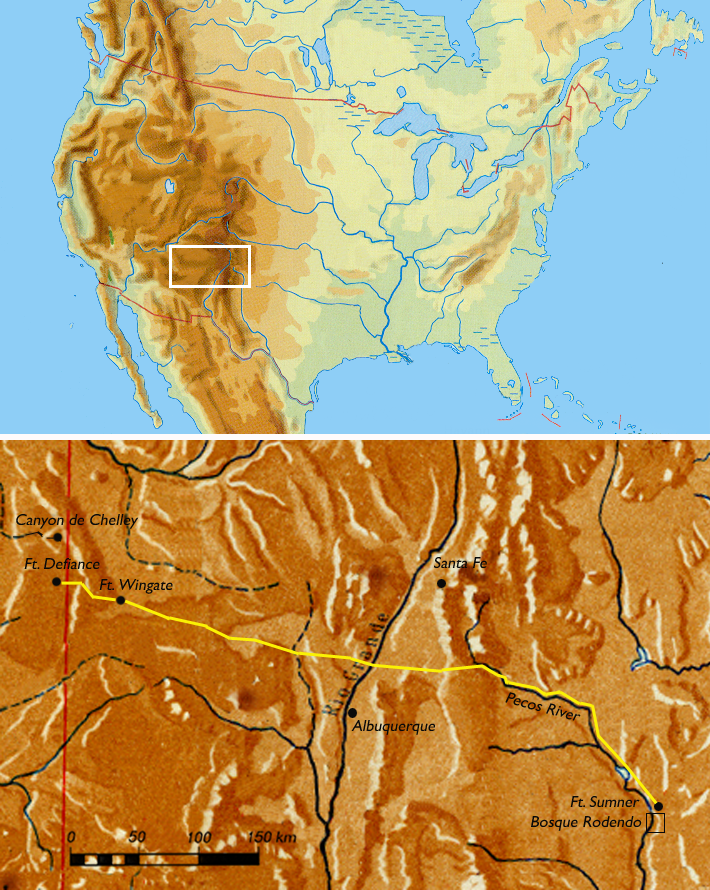
The Long Walk was more a series of death marches than a single walk. Diné oral histories document at least 53 separate forced marches between 1863 and 1866, as the US Army systematically drove the Diné people from their homeland in present-day Arizona and New Mexico toward Fort Sumner. The most infamous march covered roughly 300 miles and was carried out in winter, at gunpoint. People who fell behind were shot or left. Pregnant women gave birth on the trail. Diné women faced compounding dangers beyond the march itself: kidnapping by raiding parties, sexual violence, the impossible calculus of keeping children alive in brutal winter conditions with nothing to offer them. Elders who could not maintain pace died on it.
The Scorched-Earth Campaign Behind Bosque Redondo
The military campaign that preceded the marches was designed, deliberately, to collapse the Diné food system. Brigadier General James Carleton ordered it. Historians working from his military correspondence have documented the reasoning plainly (such as his directive that Navajo crops, orchards, and livestock be destroyed so the people could not sustain resistance from their own land): you cannot force a people to surrender if they can feed themselves. Starvation was as much of a weapon as any soldier’s rifle, and in many ways significantly more cruel.
To carry it out, Carleton sent Colonel Kit Carson, whose name still adorns a national forest, a Colorado town, and until recently several statues. Carson carried out a scorched-earth campaign through Diné farmland: burning villages, destroying fields, slaughtering livestock. The peach orchards of Canyon de Chelly were a particular target; some of those trees had been growing for generations, and they were cut down. More than five thousand Navajo sheep, goats, and mules were confiscated, and more than seventy-five thousand pounds of wheat were destroyed or seized. Headman Standing Bear told Carson directly: “You have burned our homes, destroyed our crops and cut down our peach trees that took many years to bear fruit.”
What Standing Bear described was the plan. The population health collapse at Bosque Redondo, mass death, mass trauma, food systems dismantled over the course of a campaign, was the outcome of decisions made by named officials in a documented chain of command. Carleton wrote the orders. They are in the archives. The names are known.
Bosque Redondo as a Public Health Disaster
Let’s look at this the way an epidemiologist would, even though that framing would have meant nothing to anyone at Fort Sumner in 1863. When a population experiences mass mortality, the first question is exposure: what were people exposed to, and how?
At Bosque Redondo, the exposures were layered. The ideological one came first: Manifest Destiny, functioning less like a policy and more like a pathogen, spreading the belief that the Diné had no rightful claim to their land or their lives on it. Then came the physical stressors of the Long Walk itself: 300 miles on foot, in winter, at gunpoint, with people dying on the trail before they ever reached the camp.
And then the camp. Alkaline soil. Brackish water. Inadequate shelter. Controlled rations, administered to a confined population with no way to leave and no recourse when the supply chain failed them. Add the psychological weight of watching your food system destroyed, your elders shot for falling behind, your children born into confinement, and you have what epidemiologists now recognize as toxic stress at a population scale.
Approximately 2,000 people died across those four years. Roughly one in four. Alongside the deaths: chronic illness, psychological trauma, reproductive harm, and the loss of agricultural and ceremonial knowledge built across generations. The Diné who walked out of Bosque Redondo had buried their children, watched their elders die, and left behind practices that had organized their lives for as long as anyone could remember.
Public health has a name for this: a social determinants catastrophe. The physical environment and the political environment, working together, configured to produce illness and death at scale. Every decision that shaped that environment was made by someone with a name and a rank.
June 1, 1868: The Unusual Treaty That Ended Bosque Redondo
By 1868, even the United States government had concluded that Bosque Redondo was an expensive failure, costly to supply, visibly deadly, and militarily pointless. General William Tecumseh Sherman arrived at Fort Sumner to negotiate an end to the arrangement.
The Diné leaders who met him, most prominently Barboncito, whose diplomatic skill at these negotiations is one of the great underrecognized achievements of 19th-century American history, made an argument that was both simple and radical: they wanted to go home. The proceedings recorded by the council secretary note that Diné women, though not seated at the negotiating table, played an equally important role, their counsel shaping the positions Barboncito brought forward, their survival the living argument he was making.
Barboncito’s Argument
Barboncito’s speech at the negotiations deserves more attention than it gets. He asked for no compensation for the losses at Bosque Redondo, no more hospitable reservation elsewhere. His argument, made with precision and force, was that the Diné were dying because they were separated from Dinétah, their homeland, and that returning them to it was the only intervention that would actually work. “The bringing of us here has caused a great decrease in our numbers,” he told Sherman. “Many of us have died, also a great number of our animals. Our grandfathers had no idea of living in any other country except our own, and I do not think it is right for us to do so.”
When Sherman offered the alternative of relocating to Indian Country in Oklahoma, Barboncito rejected it outright, fearing, correctly, that Oklahoma would be another Bosque Redondo. He insisted on Dinétah specifically. Home.
It’s worth sitting with what kind of argument Barboncito was making. Place, land, and sovereignty are the conditions that make health possible. He was making a social determinants case before the field of social determinants existed, and he was making it to one of the Union Army’s most capable generals, in the immediate aftermath of a four-year demonstration of what happens to a people removed from those conditions.
Sherman agreed. The treaty signed on June 1, 1868 was genuinely unusual in the annals of 19th-century US Indian policy: the United States agreed to let the Diné return to a portion of their ancestral homeland. Smaller than what they’d had, but theirs. Within weeks, roughly 10,000 Diné people walked home. Observers reported they dropped to their knees and wept when they crossed the Chuska Mountains and saw Dinétah for the first time in years.
It was a beginning. What it began is still unfinished.
Sovereignty and Health Are the Same Question
Contemporary Indigenous public health scholars, including Donald Warne (Oglala Lakota), Lori Alvord (the first Navajo woman to become a board-certified surgeon and author of The Scalpel and the Silver Bear), and the researchers at the Navajo Nation Department of Health, share a consistent argument: you cannot meaningfully improve Indigenous health outcomes without restoring Indigenous self-determination. More IHS clinics, more federally funded screening programs, more staff are all meaningful, but they are downstream of the prior question of who controls the land, the food, the governance, and the knowledge systems that determine health in the first place.
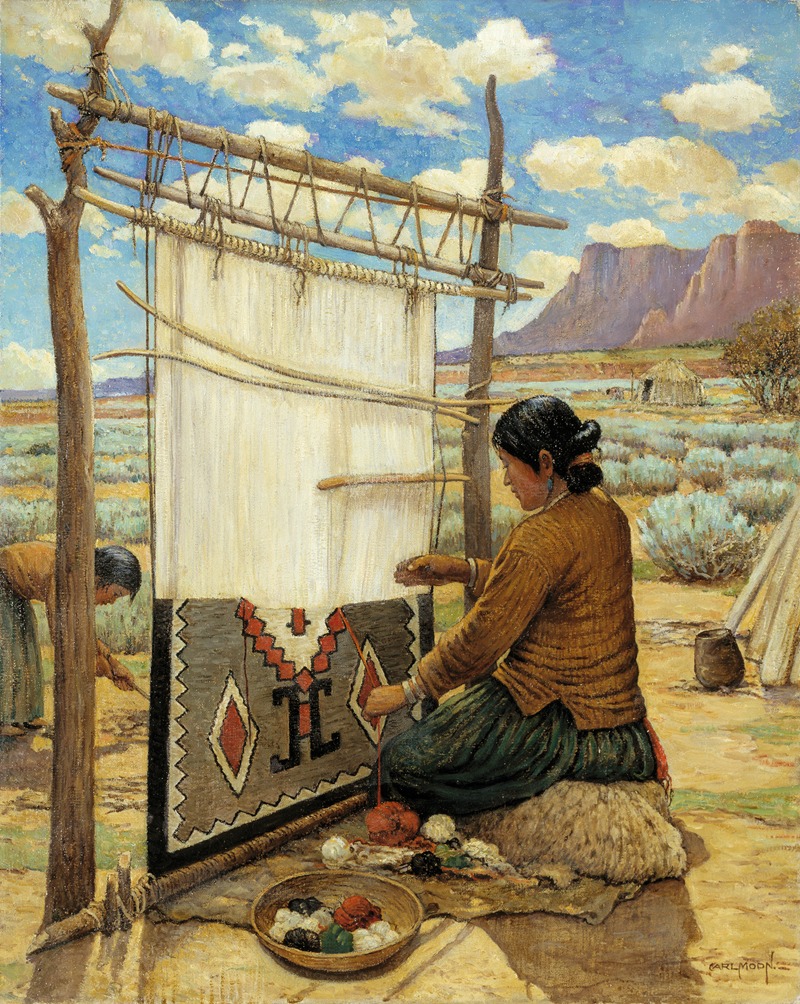
The Diné understood this in 1868. The Long Walk had destroyed lives, and it had destroyed a food system: orchards, sheep herds, dryland farming practices, and pastoral knowledge built and refined over centuries of life in a specific landscape. Much of that knowledge lived with Diné women, who had long been the keepers of seed saving, agricultural practice, and the weaving traditions that were inseparable from Diné economic and ceremonial life. The return to Dinétah began the slow reconstruction of those systems, and women were central to it. The sheep herds were rebuilt. The orchards, eventually, replanted. The ceremonial and agricultural calendar that organized Diné life began to reassemble around its proper geography.
Food Sovereignty as Medicine
Food sovereignty as a health intervention, at its most fundamental level, is land. The ability to grow, raise, harvest, and prepare food according to practices developed for a specific place, passed down through a specific community. Strip a people of that, and you strip them of a health infrastructure that no amount of federal appropriation can fully replace. Return it, and you give them back the conditions under which health is possible.
Contemporary Diné food sovereignty efforts are working in this lineage directly, treating the rebuilding of traditional food systems as a public health strategy rather than a cultural one, even though it is both. The stakes are concrete: diabetes and metabolic disease rates on the Navajo Nation are among the highest in the United States, and they trace to the displacement of traditional diets by government commodity foods introduced during the reservation era. Frybread emerged from that displacement, made from the lard, white flour, and canned goods the government supplied when it had destroyed everything else, and it has since become a food with its own cultural meaning, which is its own kind of resilience. The food sovereignty movement holds both of those truths at once, working to restore what was taken while honoring what was built from the wreckage.
The Next 150 Years: After Bosque Redondo, Before Justice.
The walk home is not where the story ends.
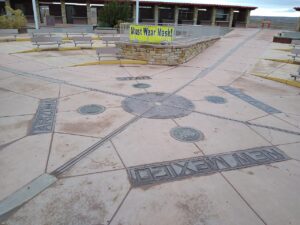
The treaty returned the Diné to a portion of their homeland. The subsequent 150 years brought new iterations of the same structural dynamic, delivered through different mechanisms.
Uranium and the Nuclear Legacy
Uranium mining on Navajo land ran from 1944 to 1986, supplying the US nuclear weapons program. The mines operated without adequate worker protections, and when ore prices dropped, companies abandoned them without remediation. More than 500 federally recognized abandoned uranium mines now sit on Navajo land. The peer-reviewed literature documents the consequences: Navajo men with uranium mining history faced 28.6 times the risk of new lung cancers compared to those without. Kidney disease, birth defects, and elevated cancer rates in communities near abandoned mine sites persist today. The people whose land produced the material for American nuclear weapons got the contamination. The weapons went elsewhere.
Sterilization and Reproductive Harm
In the early 1970s, Indian Health Service physicians performed sterilizations on Native American women, sometimes without meaningful informed consent, sometimes with consent obtained under coercion, sometimes on minors. A 1976 Government Accountability Office investigation found that IHS had sterilized approximately 3,406 Native American women between 1973 and 1976 across just four of twelve IHS service areas. The Diné were among the communities affected. Broader estimates suggest the actual total was substantially higher.
The IHS Funding Gap
The Indian Health Service, established in 1955 to fulfill the federal government’s treaty obligations to provide healthcare to Native nations, has run chronically underfunded since its founding. A 2019 GAO report found IHS per capita spending at $4,078, compared to $8,109 for Medicaid and $13,185 for Medicare. Congress sets that number every year. Every year, it falls short.
Bosque Redondo’s Long Shadow: COVID-19
In the spring of 2020, the Navajo Nation briefly recorded the highest per-capita COVID-19 infection rate in the United States, surpassing New York and New Jersey at the peak of the outbreak. The structural reasons were legible: multigenerational households crowded into homes built for nuclear families, IHS facilities without pandemic surge capacity, long distances to any hospital. And this: approximately 30 to 40 percent of Navajo households lacked access to running water, making basic handwashing a genuine logistical problem in the middle of a respiratory pandemic. The community response, roadblocks, mutual aid networks, the Navajo and Hopi Families COVID-19 Relief Fund, was extraordinary. The structural conditions that made that response necessary were neither new nor accidental.
“No running water in 30 to 40 percent of homes” is a sentence that should not be possible to write about any community in the United States in 2020. It became possible because the federal government never fully honored the treaty obligations it made in 1868, and because 150 years of subsequent decisions about IHS funding, infrastructure investment, water rights, and uranium mine cleanup compounded the original deficit rather than correcting it.
The Public Health Meaning of Bosque Redondo
Public health curricula tend to organize around pathogens, interventions, and outcomes. That is all genuinely important. But it can obscure an entire class of events in which the exposure is a policy decision and the pathogen is irrelevant, where what needs to be measured is the predictable health consequence of a government choosing to harm a specific population — in some cases, to slowly eradicate one.
Bosque Redondo is a canonical example. The mortality was caused by Carleton’s orders, Carson’s campaign, the design of the camp, and the chronic underfunding of the supply chain that the Army controlled. Specific decisions made by specific officials produced a measurable excess death toll in a specific population, and those decisions are traceable, documented, and named.
What the Treaty Actually Did
The Treaty of June 1, 1868 ended the acute phase of that policy catastrophe. Barboncito argued successfully that the conditions for Diné health existed in Dinétah and nowhere else. He was right. The subsequent interventions most correlated with improved Diné health outcomes are political: land, water, self-governance, resource sovereignty, and the ability to maintain and transmit the cultural and food system knowledge that the Long Walk tried to destroy.
The questions of IHS funding adequacy, Navajo Nation water access, uranium mine remediation, and land sovereignty are all of it public health, the same public health that Carleton’s orders violated and that Barboncito’s argument partially restored.
If you learned about the Long Walk at all, you probably encountered it as frontier history, one episode in a long series of conflicts between the US government and Native nations, and if you were taught it like I was in public school, it was a footnote to Manifest Destiny, which was taught as a foundationally good thing. It is, more precisely, a documented case of state-engineered population health collapse, with a treaty at the end that restored partial conditions for recovery, and a century and a half of subsequent policy choices that have continued to determine how complete that recovery can be.
June 1, 1868 is worth marking because of what was built, not just because of what ended. What was built was deliberate, by named people, for documented reasons. And what gets built once can be built again, unless the policy decisions that produced it are named, sourced, and taught — and unless the generations-long echoes of those decisions are treated as the public health emergency they are.
If this article has been interesting or useful to you, a share on social media, reference, etc. would be greatly appreciated. If you’d like to learn more about Public Health History, come back tomorrow for another entry into Today in Public Health History. Also, if you’d like to learn more about the underpinnings of public health, please check out some of our tutorial content, such as our Epi Explained series!