CPH Focus: Communication: Cultural Competency: Strategies for Culturally Competent Communication
In this tutorial, we will explore the strategies for culturally competent communication, which are essential for public health professionals to effectively engage with diverse populations. Culturally competent communication involves understanding, respecting, and responding to the cultural, social, and linguistic needs of individuals and communities. This ensures that health messages are accessible and resonate with all populations, regardless of their cultural background.
By understanding and applying these strategies, public health professionals can improve health outcomes, reduce health disparities, and build trust within diverse communities. Mastery of these strategies is also critical for success on the Certified in Public Health (CPH) exam.
Table of Contents:
- Introduction to Culturally Competent Communication
- Strategies for Culturally Competent Communication
- Understand Cultural Differences
- Use Plain Language
- Incorporate Translators and Interpreters
- Practice Active Listening
- Build Trust and Respect
- Be Aware of Your Own Biases
- Practice Questions
- Conclusion
1. Introduction to Culturally Competent Communication
Culturally competent communication is the ability to convey health information in a way that is respectful of and responsive to the cultural and linguistic needs of diverse populations. This requires public health professionals to understand the cultural context in which people live, as well as their values, beliefs, and communication preferences.
Efforts to improve cultural competence in communication are vital to addressing health disparities and improving health equity. When messages are tailored to fit the cultural context of the audience, they are more likely to be understood, accepted, and acted upon.
2. Strategies for Culturally Competent Communication
2.1 Understand Cultural Differences
One of the key strategies for culturally competent communication is understanding the cultural differences that influence how people perceive and respond to health messages. These differences may include language, beliefs about health and illness, family dynamics, and decision-making processes.
By taking the time to learn about the customs, values, and communication styles of different cultural groups, public health professionals can tailor their messages to resonate with the audience. For example, some cultures may place a strong emphasis on family involvement in health decisions, while others may prioritize individual autonomy.
2.2 Use Plain Language
Using plain language is critical in ensuring that health messages are clear and understandable to people with varying levels of literacy and education. Plain language involves using simple, straightforward words and avoiding jargon, technical terms, or acronyms that might confuse the audience.
When communicating with diverse populations, public health professionals should ensure that messages are accessible to those with limited health literacy. This may also include using visuals, such as infographics or diagrams, to complement written or spoken information.
2.3 Incorporate Translators and Interpreters
In communities where English is not the primary language, it is essential to incorporate translators and interpreters to bridge language barriers. Providing health information in the preferred language of the audience ensures that key messages are understood and reduces the risk of miscommunication.
Public health organizations should partner with qualified translators who are familiar with both the language and the cultural context of the population. Additionally, interpreters should be used carefully to ensure that the intended message is accurately conveyed in both directions.
2.4 Practice Active Listening
Active listening is a critical component of culturally competent communication. It involves fully engaging with the audience, listening carefully to their concerns, and asking clarifying questions to ensure understanding.
By practicing active listening, public health professionals can gain insights into the cultural values and health beliefs of the community. This helps to build trust and ensures that the health messages they deliver address the audience’s needs and concerns.
2.5 Build Trust and Respect
Building trust and respect is essential for effective communication with culturally diverse populations. Many communities, particularly those that have been historically marginalized, may have a distrust of public health institutions or healthcare providers.
To build trust, public health professionals must show respect for the culture, values, and experiences of the community. This can be done by engaging community leaders, involving local organizations in message development, and being transparent about the purpose of the communication.
2.6 Be Aware of Your Own Biases
Public health professionals should be mindful of their own personal biases and how these may influence their communication. Cultural competence requires ongoing self-reflection to ensure that personal beliefs or assumptions do not interfere with the delivery of health messages.
Being aware of and addressing unconscious biases helps professionals to approach each interaction with an open mind and a genuine respect for the diversity of the populations they serve.
3. Practice Questions
Test your understanding of culturally competent communication strategies with these practice questions. Try answering them before checking the solutions.
Question 1:
Why is it important to use plain language when communicating health information to diverse populations?
Answer 1:
Answer: Click to reveal
Using plain language ensures that health messages are clear and accessible to individuals with varying levels of literacy and education. Plain language helps prevent misunderstandings and makes it easier for people to act on the information, regardless of their background or language proficiency.
Question 2:
How can public health professionals build trust with culturally diverse communities?
Answer 2:
Answer: Click to reveal
Public health professionals can build trust by respecting the cultural values and experiences of the community, engaging local leaders or organizations, and being transparent about their intentions. Trust is strengthened by demonstrating a genuine commitment to addressing the community’s needs and concerns.
Question 3:
In what situations might it be necessary to use translators or interpreters, and why?
Answer 3:
Answer: Click to reveal
Translators or interpreters are necessary when communicating with individuals or communities who do not speak English or have limited proficiency in the language used by public health professionals. Using translators ensures that important health messages are accurately conveyed and understood, reducing the risk of miscommunication and improving health outcomes.
4. Conclusion
Effective communication across cultural boundaries is essential for addressing health disparities and improving public health outcomes. By employing strategies such as understanding cultural differences, using plain language, incorporating translators, and building trust, public health professionals can ensure that their messages are accessible and impactful for all populations.
Remember, culturally competent communication requires ongoing effort and self-reflection to ensure that the needs of diverse communities are met respectfully and effectively. These strategies will help you communicate more effectively with diverse audiences and prepare you for the Certified in Public Health (CPH) exam.
Humanities Moment
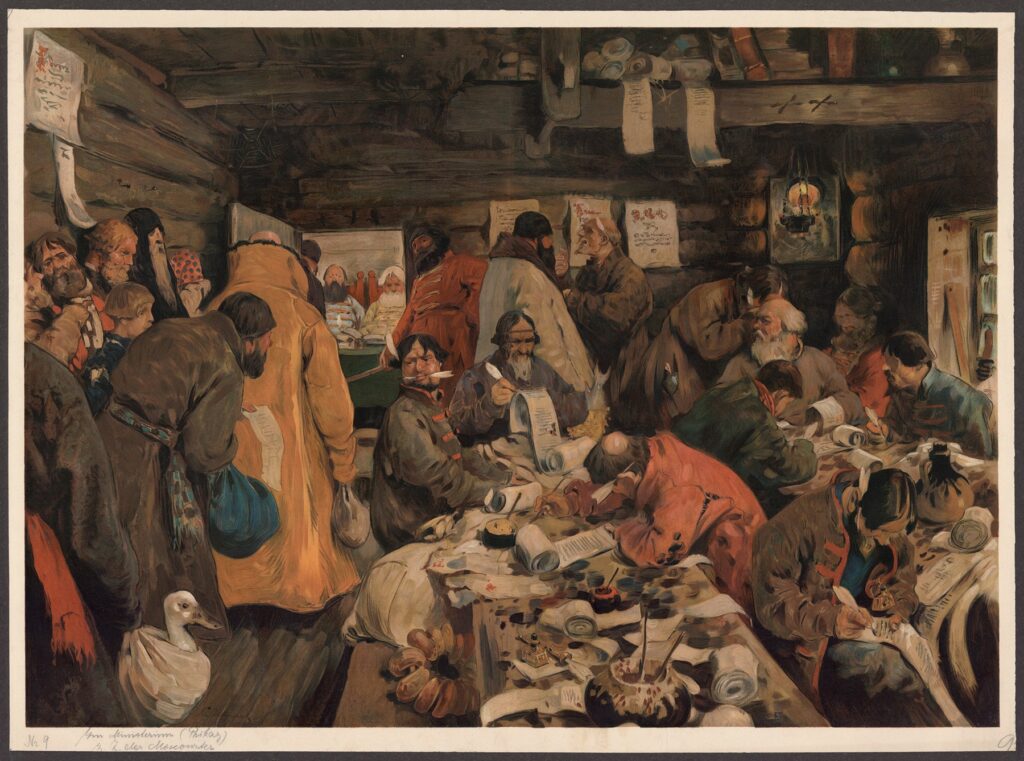
The featured image for this CPH Focus article is “A Law Office in Muscovite Times” by Sergey Ivanov (Russian, 1864 – 1910). Sergey Vasilyevich Ivanov was a Russian genre and history painter associated with social realism. Trained in Moscow and at the Imperial Academy of Arts, he became known for powerful works documenting peasant resettlement, migration, and hardship in late-19th-century Russia. He later turned to historical subjects, taught at the Moscow School of Painting, and illustrated major Russian literary classics.
Interested in preparing for the Certified In Public Health Exam with us even more? Check out our CPH Focus series of articles! Our goal is to cover every topic in the CPH Exam to make sure you have the best chance possible of passing with flying colors.