CPH Focus: Communication: Cultural Competency: Cultural Influences on Health Behaviors
In this tutorial, we will explore how cultural influences shape health behaviors and how cultural competency is essential in public health communication. Understanding these cultural factors is crucial for Certified in Public Health (CPH) exam candidates and for designing effective health interventions that resonate with diverse populations. This knowledge will ensure that health messages are respectful, relevant, and effective across different cultural contexts.
By the end of this tutorial, you will understand the importance of cultural influences on health behaviors and how to incorporate these insights into public health practice. Practice questions are included to reinforce your understanding.
Table of Contents:
- Introduction to Cultural Influences on Health Behaviors
- Key Cultural Factors Affecting Health Behaviors
- Beliefs About Health and Illness
- Traditional and Modern Health Practices
- Religious and Spiritual Beliefs
- Formal and Informal Influences
- The Role of Family and Community in Health
- Social Norms and Expectations
- Influence of Socioeconomic Status
- Strategies for Addressing Cultural Influences in Public Health
- Practice Questions
- Conclusion
1. Introduction to Cultural Influences on Health Behaviors
Cultural beliefs, values, and practices play a significant role in shaping health behaviors. These influences affect how individuals perceive health and illness, their willingness to seek medical care, and their adherence to health recommendations. Cultural competency in public health communication requires understanding these cultural nuances to ensure that health messages are effective and respectful of the audience’s beliefs and practices.
Public health professionals must acknowledge and address the diverse cultural influences on health to develop interventions that meet the needs of different populations and reduce health disparities.
2. Key Cultural Factors Affecting Health Behaviors
Cultural beliefs and practices have a profound impact on health behaviors. Public health professionals must be aware of the following key cultural factors that influence how individuals approach their health:
2.1 Beliefs About Health and Illness
Different cultures have varying beliefs about the causes of illness and how health is maintained. These beliefs influence whether individuals seek medical care, adhere to treatment plans, or use traditional remedies.
- Biomedical Model: Many Western cultures follow the biomedical model, which views disease as a result of biological factors and emphasizes medical treatments like medication and surgery.
- Spiritual and Holistic Models: In many cultures, health is seen as a balance between physical, spiritual, and emotional well-being. Illness may in some cases be attributed to spiritual causes, such as evil spirits or curses, and treated with traditional or spiritual practices.
2.2 Traditional and Modern Health Practices
In some cultures, traditional health practices, such as herbal medicine, acupuncture, or spiritual healing, are commonly used alongside or instead of modern medical treatments. Public health interventions must respect these practices and find ways to integrate traditional and modern approaches when appropriate.
- Traditional Medicine: These practices are often deeply rooted in cultural beliefs and may involve natural remedies, rituals, or spiritual healing methods. Incorporating or acknowledging these practices can help build trust with communities.
- Modern Medicine: Modern healthcare emphasizes evidence-based treatments, but some populations may be hesitant to use them due to distrust of the healthcare system or cultural preferences for traditional methods.
2.3 Religious and Spiritual Beliefs
Religion and spirituality play a significant role in shaping health behaviors. Some religious groups may have specific beliefs about health, illness, and medical treatments, such as prohibitions against certain types of medical interventions or the use of prayer and faith healing.
- Faith-Based Healing: In some cultures, individuals may rely on prayer or spiritual rituals for healing rather than medical interventions. Public health professionals should respect these beliefs and, when possible, find ways to integrate them with modern healthcare practices.
- Religious Restrictions: Some religious groups may have restrictions on certain medical treatments (e.g., blood transfusions or vaccinations). Public health messaging should be sensitive to these beliefs and offer culturally appropriate alternatives when available.
3. Formal and Informal Influences
In addition to cultural beliefs, health behaviors are also influenced by formal and informal social structures, such as family, community, and socioeconomic factors. Public health professionals must consider these influences when designing interventions.
3.1 The Role of Family and Community in Health
In many cultures, family and community play a central role in health decisions. Health behaviors are often influenced by collective decision-making, and individuals may rely on family members or community leaders to guide their health choices.
- Collective Decision-Making: In some cultures, health decisions are made collectively, with input from family members or elders. Public health interventions that engage families or community leaders may be more effective in these contexts.
- Community Leaders: Religious leaders, traditional healers, or community elders often have significant influence over health behaviors. Engaging these figures in public health campaigns can increase trust and acceptance.
3.2 Social Norms and Expectations
Social norms and expectations within a culture shape health behaviors by influencing what is considered acceptable or desirable. For example, norms around diet, physical activity, or substance use vary widely across cultures and can impact individuals’ health choices.
- Gender Roles: In some cultures, gender roles shape health behaviors, with expectations around how men and women should manage their health. For example, women may be expected to prioritize family health over their own, or men may avoid seeking medical care due to societal pressures.
- Stigma: Certain health conditions, such as mental illness or HIV, may be stigmatized in some cultures, leading individuals to avoid seeking care or disclosing their condition. Public health campaigns must address stigma to encourage open conversations about these issues. This may also be true for certain treatment modalities.
3.3 Influence of Socioeconomic Status
Socioeconomic status (SES) also influences health behaviors by affecting access to healthcare, education, and resources. Individuals with lower SES may face barriers to adopting healthy behaviors due to financial constraints, limited access to healthcare and resources, or educational disparities.
- Financial Barriers: Low-income individuals may struggle to afford medical care, healthy food, or fitness opportunities, which can affect their health behaviors. Public health interventions should consider financial constraints when designing solutions.
- Educational Barriers: Lower levels of education can limit understanding of health information, leading to disparities in health literacy. Public health messaging must be clear and accessible to all education levels.
4. Strategies for Addressing Cultural Influences in Public Health
To ensure that public health interventions are effective across diverse cultural groups, public health professionals should use culturally competent strategies that respect and integrate the cultural influences on health behaviors.
- Engage with Communities: Build relationships with communities by involving local leaders, families, and religious figures in the development and delivery of health messages. This approach fosters trust and increases the likelihood that messages will be accepted.
- Use Culturally Relevant Messaging: Tailor health messages to align with the cultural beliefs, values, and practices of the target population. Use language, imagery, and examples that resonate with the community’s cultural identity.
- Incorporate Traditional Practices: When possible, integrate traditional health practices with modern medical approaches. Acknowledging these practices shows respect for the culture and can make individuals more open to modern treatments.
- Address Barriers to Care: Identify and address barriers such as financial constraints, language barriers, or educational gaps. Provide resources or alternatives that make it easier for individuals to adopt healthy behaviors.
5. Practice Questions
Test your understanding of cultural influences on health behaviors with these practice questions. Try answering them before checking the solutions.
Question 1:
A public health professional is designing a campaign to promote diabetes prevention in a community that relies heavily on traditional healing practices. What approach should the professional take to ensure the campaign is culturally competent?
Answer 1:
Answer: Click to reveal
The public health professional should engage with traditional healers and community leaders to integrate traditional practices with modern diabetes prevention strategies. The campaign should use culturally relevant messages, such as explaining how traditional practices can complement modern medical advice on diet and exercise.
Question 2:
In a community where family plays a central role in health decisions, how can public health professionals design interventions to be more effective?
Answer 2:
Answer: Click to reveal
Public health professionals should involve families in the intervention by encouraging family-based activities or group health screenings. They could also hold community events that bring families together to learn about health issues, ensuring that decisions are made collectively.
Question 3:
A public health campaign aims to increase vaccination rates among a religious group that has concerns about modern medical treatments. How can the campaign be tailored to respect the group’s beliefs?
Answer 3:
Answer: Click to reveal
The campaign should involve religious leaders to address concerns and provide accurate information about vaccinations. Messaging should respect the group’s spiritual beliefs and offer assurances about the safety and compatibility of vaccines with their religious practices.
6. Conclusion
Cultural influences play a critical role in shaping health behaviors, and understanding these influences is essential for public health professionals. By recognizing the beliefs, values, and social norms that affect health behaviors, public health professionals can design interventions that are culturally competent and more likely to succeed in diverse populations.
Humanities Moment
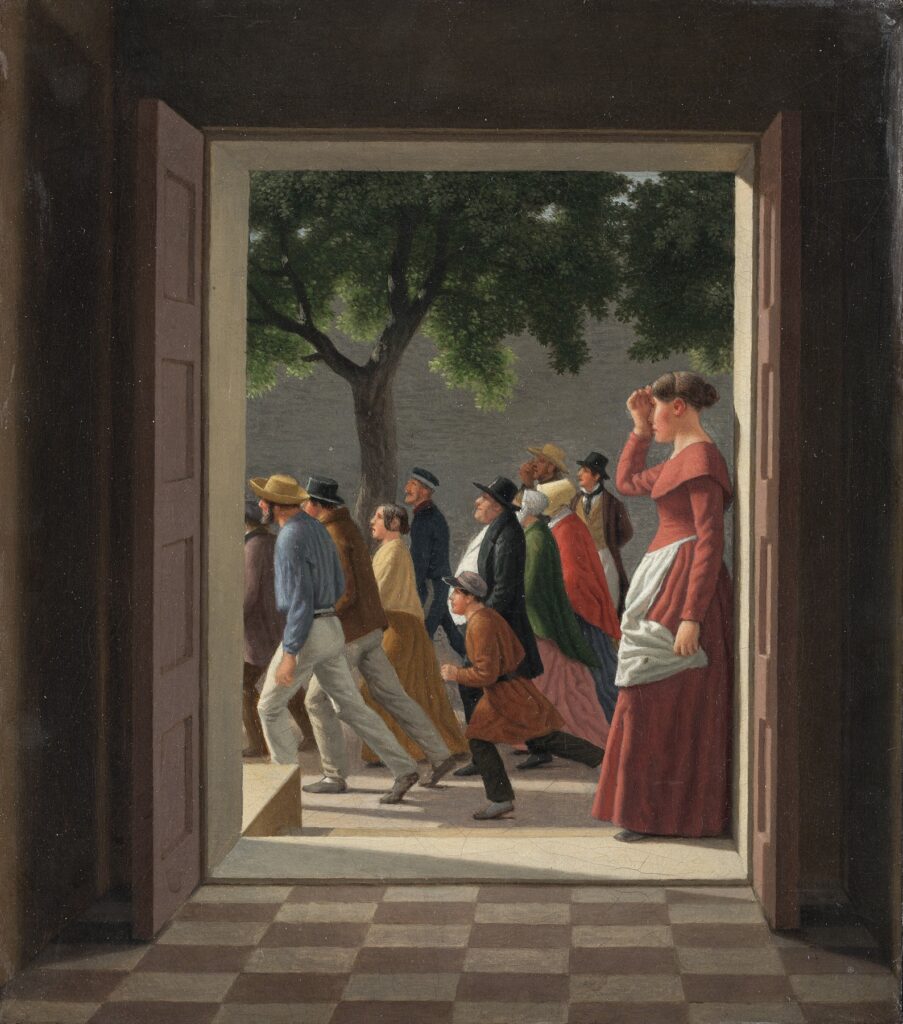
The image for this CPH Focus article is “View through a Door to Running Figures (1844 – 1845)” by Christoffer Wilhelm Eckersberg (Danish, 1783 – 1853). Christoffer Wilhelm Eckersberg was a Danish painter and leading figure of the Golden Age of Danish Painting, often called the “Father of Danish painting.” Trained at the Royal Danish Academy and later in Paris under Jacques-Louis David, he combined neoclassical discipline with close observation of nature. His travels in Italy deeply influenced his work, particularly his use of light and realism. As a long-serving professor and director of the Academy, Eckersberg shaped generations of Danish artists and left a lasting impact on Denmark’s artistic tradition.
Interested in continuing to study with us to ace the Certified in Public Health exam? Check out our CPH Focus articles for more prep materials! And follow us on BlueSky for notifications when a new article drops!